Forgiveness: mending the broken truths of resentment

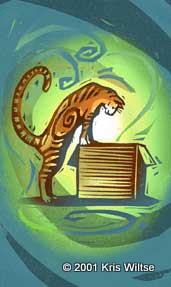
Today it occurred to me that there is no card in the Mixed Emotions deck for “Forgiveness.” So I made one using one of the five blank cards included with the deck.

I realized that I still feel resentment for things that took place long ago, and that forgiveness might be in my best interest because I cannot receive what I want when my hands are tightly clenched around something that I don’t want. I can only receive when I release what I am holding and empty my hands.

ResentfulIf I am holding tightly to resentments toward my ex-husband, for example, can I receive the soulmate that I long for?

If I hold on to feelings of resentment toward a businessman who deceived me, can I receive a working relationship that is based on ethics, truth, and integrity?

If I resent a parent for failing to provide, can I receive providence?

I went all the way back, year by year, and wrote down every resentment I had that needed to be forgiven. I forgave my parents for getting pregnant with my brother three months after I was born. I forgave my brother for being born. I forgave God for the simultaneous deaths of two friends in their teens. I forgave myself for encouraging Dad to go to the hospital, which turned out to be the beginning of his end. On and on.

I wrote about 30 resentments down on pieces of paper–I had no idea that I harbored so many. Then I burned them up one by one and asked my spiritual companions to clear them from every dimension of my being, both physical and non-physical.

I recently read and quickly purchased the book Old Turtle and the Broken Truth by Douglas Wood. A “broken truth” is a truth that is incomplete. In the story, a stone that said “You are loved” was found, treasured, and fought over–but no one knew that part of the stone was missing. The missing piece said “And so are they.” The point being that we are all loved.

Resentments are broken truths. Forgiveness makes them whole.

The illustration, by Kris Wiltse, is from the “Resentful” card, which is part of the Mixed Emotions card deck.

Sebastian

If Death were a restaurant,
And I was seated beside your table,
I’d look through the menu
and then tell the waiter,
“I’ll have what he’s having.”

You couldn’t have ordered it up any better.

Unfortunately, the waiter brought your meal
Forty years too soon.

Sebastian Degen died at age 47
on July 2, 2009

When you pray, move your feet

There’s an African proverb that says, “When you pray, move your feet.” It has never made sense to me to sit on the couch praying, when there was something I could do to achieve my heart’s desire, so that saying sits well with me.

But I have also been accused of feeling that I need to “earn my keep” in the Universe–that I must always do, and cannot just be. I’ve never really known how much I should be doing and how much I should be leaving to the Universe.

The other day, I read a quote by Abraham Hicks that’s really been bugging me:

Trying too hard IS resisting… for this reason — think about this — if you decide that you want to go to the grocery store and buy a quart of milk, do you ever find yourself trying too hard? Or do you just go get it?

And the reason you just go get it is because you have absolute knowledge – you KNOW. You know you have the ability to go, you know you have the money in your purse, you know the milk will be there when you get there. In other words, there is no doubt and so there is no trying against anything. And so whenever you’re trying too hard, what is happening is there is a part of you that is not believing that it can be.

That all makes sense, but what’s bugging me is: where is the dividing line between trying enough and trying too hard? Where is the dividing line between praying and moving your feet? I mean, do you sit on the couch and pray for a quart of milk, visualize a quart of milk, believe in a quart of milk, have faith that a quart of milk will come to you. . . or do you just go to store and get it? What do you take care of yourself, and what do you leave to the Universe?

I’ve wrestled with this a lot, and forgive me if it’s too obvious, but here’s what I’ve come up with:

My to-do list

  • Everything within my power

The Universe’s to-do list

  • Everything else

It’s that whole you-can’t-win-the-lottery-unless-you-buy-a-ticket argument. I buy my ticket, and the Universe lines that up with the winning numbers.

But maybe I’ve become over-invested in how the Universe answers my prayers.  I mean, isn’t the lottery-ticket analogy basically saying, “OK, Universe, I want money, and here’s how I want you to provide it for me”? If I were the Universe, that’d piss me off. If my son said, “Mama, let’s go to the beach” and then said, “OK, get your purse. Do you have your car keys? Get in the car and start it. Back out of the driveway and turn left when you come to the end. Did you remember my skim board? Turn your blinker on, and then turn left on Thompson Road. Did you remember to bring a towel? OK, now turn your blinker on and turn right on the highway. Watch for traffic!” I’d say, “Forget it. There’s no room for me in this.”

But if I focus on the “what” and let the Universe figure out the “how,” doesn’t that mean praying and not moving my feet?

I’m so confused.

Synchronicities

So, I was having a talk with my Spiritual Entourage (angels, guides, my higher self–basically anyone who would listen), about my worries the other day and said, “I want tangible evidence that you’re working on my behalf.” I was at a place where I had no interest in faith or positive thinking–I’d been doing that for months. I wanted proof that things were going to get better.

Then, at the beach, I found this cookie fortune on the ground:

You will soon hear pleasant news of a personal nature

I’ve actually been hoping for some good news–very specific good news–so it’s exactly what I needed to hear to put a little wind in my sails. Coincidence? Maybe. But it’s the second time in six months that that happened.

I was deer-in-the-headlights scared in November and took my son for a haircut. I got out of the car, looked down, and there on the ground lay a cookie fortune that said:

You will be fortunate in everything you put your hands to

Is this normal? Do people just happen to be miles from a Chinese restaurant, park their car in exactly the right place and look down just before a puff of wind blows away a little slip of paper that could make them feel better? That doesn’t even take into account the person who dined at a Chinese restaurant, opened a fortune cookie, removed the fortune, liked it well enough to keep it, and lost it right where I’d eventually find it.

I’m not exactly sure what conclusions to draw from this, but one thing’s for sure.

My Entourage loves Chinese food.

God’s housecat

I wish I was
God’s housecat.
I’d curl up at the
foot of His bed,
squinting in the sunlight.

Then I’d saunter into
the kitchen, just as
God was opening a
can of tuna.
He’d set the empty can
on the floor,
laugh when I feigned disinterest,
and then scratch me behind the ears.

When He wasn’t looking,
I’d lick out the can,
head over to my litter box,
and notice that it
needs cleaning.

© 2009 Petra Martin

Curious

The illustration, by Kris Wiltse, is from the “Curious” card, which is part of the Mixed Emotions card deck.

Spiritual loneliness, spiritual partnership

For as long as I can remember, I’ve suspected that there’s more to myself than me. I’ve suspected that I’m part of something larger, that I come from somewhere else, and that I’ll return there when I die. I did not find comfort in these realizations. They just made me feel abandoned and Unsureled me to wonder how God/Source/Spirit/the Universe could put me on this planet, wipe out every memory I have of home, and then expect me to find my way back without a road map.

The isolation I felt was right up there with Jesus’ “My God, my God, why hast thou forsaken me?”  I surmised that finding my way home was the point of my journey, but I couldn’t understand why I had to make the trip alone.

When I was in the fourth grade, I responded to a hell-fire-and-brimstone altar call at a Baptist church, but by the time I reached my late teens, the road to Armageddon and the Rapture began to feel wrong for me. The tipping point came when I read the now out-of-print book The Mythmaker: Paul and the Invention of Christianity. After that, I still believed that Jesus was a revolutionary teacher who modeled all that we can achieve as human beings, but I no longer believed that he sacrificed his life to save me from a hell that I didn’t believe existed.Lonely
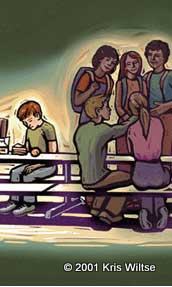
Having been a Sunday school teacher, youth group leader, Christian camp counselor, and RA (resident assistant) in a dorm at a Christian university, my decision was a shock to those who knew me. Losing their respect and friendship was extremely painful, but I had to be true to myself and tearfully headed in a different direction–alone.

Eventually, I found the road map that I was looking for in my emotions. When I listened to them, they guided me on my journey. I found people whose beliefs or teachings stretched my own, and who accompanied me on the path for a while. I came to realize that, if our journey is to be authentic, each of us must find our own road home. But I still hated the feeling of isolation.

Then, in the book Partnering with God, I recently read the following:
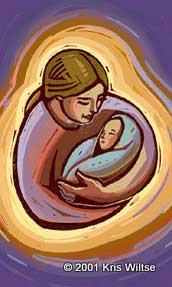
Love-familialThere are sayings you have used in the relationship between Spirit and humans for a very long time: It’s the concept of the sheep and the shepherd. And the humans somehow are equated with sheep, and the shepherd is God. Let me tell you dear ones, that the last things we want you to be are sheep! Empowered is what you are! Partnering with God has nothing to do with the shepherd/sheep relationship. Some of you have equated God with a parent, a heavenly father or mother; and you are the children. A nice picture, perhaps, but cast that away, for that is not the relationship we wish to tell you about. True partners are not in that relationship at all, and they don’t dominate each other in that manner–even in love.

Some have said, “I’m going to let go of my life and let God take over!” This is not what we ask for, dear ones. We wish you to let go of nothing . . . Some of you have said, “I’m going to surrender my life and let God have His will.” And we say NO! Don’t surrender! Instead, Commit!–not surrender. Commitment is to take charge of your life with a partner like God . . . . Oh dear ones, we promise to partner with you. For we love you beyond measure and we have been waiting for you to verbalize this [a commitment to partnership] to us. Our vow to you in this partnership is to love you throughout it all and never let you down. (Pages 62, 63, and 64.)Love-romantic

I loved the notion of partnering with God. This “marriage to the higher self” has addressed my sense of spiritual loneliness. I verbalized my commitment and wear a pair of triangular, as-above-so-below type stacking rings to remind me of it.

It gets even more interesting, though. I have experienced fear and worry lately, but now, in the context of this “marriage,” that is considered infidelity.

Anger has an agenda and love does not. It is against the very nature of your partner (God) to be angry, and yet it is there within you often! It is, however, infidelity to the very nature of a marriage with God. . . . It is against the very nature of your parter (God) to worry and yet it is there withing many of you often! It is also infidelity to the very nature of the marriage. (Page 68.)

What does this mean? It means I am not alone. It means that I can trust my Partner to take care of the things that I used to get angry and worried about. How big a relief is that?

Does this spiritual partnership make me a nun? Does it mean I can’t have a human partner? No. Foregoing parenting and partnership would rob me of growth that I couldn’t attain in any other way. Parenting my son has taught me more than any other experience, and I look forward to all that a life-long partnership with a man has to offer in the future. Partnering with Spirit simply means that I am no longer alone in my journey, and that I have a very powerful travel partner.

The illustrations, by Kris Wiltse, are from the “Unsure,” “Lonely,” “Love (platonic),” and “Love (romantic)” cards, which are part of the Mixed Emotions card deck.

Making peace with fear

Lately, I have been thinking of emotions as messengers. I’ve welcomed many of them–even negative ones.  So far, fear is the only messenger that I’ve wanted to kill. It’s the emotion that I’ve had the most difficulty sitting with and listening to. And as luck would have it, it has been pulling up a chair at my kitchen table often, lately.

What?!” I say impatiently. “Why do you keep coming back?”

“I have a gift for you,” Fear replies.

“A gift? From you?”

“Yes. I will sit here until you respond to me.”

“Well, I’m talking to you. Isn’t that enough?”

“No, you must act.”

I am not in the mood to engage in a dialog with Fear. But I want him out of my kitchen in the worst way, so I decide to humor him and think about all the ways I could act.

“OK,” I say. “I guess I could run away from what I fear.”

“True,” Fear says. “You could literally abandon it, or you could withdraw from it emotionally.”

“I could get drunk.”

“You wouldn’t feel the fear so much then. You could also engage in activities that distract you from what you fear.”

“I could deny that what I fear exists,” I say.

“True. But are those your only choices?”

“No,” I say. “I could attack what I fear.”

“How would you do that?”

“I’d come up with ideas for overcoming what I fear and decide which idea is best.”

“And then?”

“Then I’d implement my idea.”

“How does that make you feel?”

“A little more empowered. I feel less like a victim of fate. By taking matters in hand, I feel more like I’m the master of my own destiny.”

“Are those the ony feelings that come up for you?”

“No. I like brainstorming, coming up with new ideas, and solving problems. It makes me feel creative.”

“That,” says Fear, “Is my gift to you.” He pushes back his chair and gets up to leave.

“Wait,” I say. “Would you like some coffee?”

Afraid Creative

The illustrations, by Kris Wiltse, are from the “Afraid,” “Empowered,” and “Creative” cards, which are part of the Mixed Emotions card deck.

What is home?

Home is a feeling of comfort, rightness, and belonging. It’s a relationship that’s fulfilling, a job that you love, an activity that brings you joy, an environment that makes your heart sing.

Home is your purpose in life, your mission, your raison d’etre.

It’s not a place–it’s a feeling. There are many people who think they know where your home is. Parents, clergypeople, gurus, experts, and other authority figures are eager to tell you how to get there. But the truth is, you’re the only one who knows.

“But I don’t know,” you might say.

Actually, you do. All the information you need is inside you: your emotions will guide you home, and they’ll help you recognize it once you get there.

This blog augments a card deck called Mixed Emotions. Here, Petra Martin, the deck’s creator, writes about the role that emotions have played in her own life.

The upside of fear

I’ve heard many times that the opposite of love is not hatred, as you might expect, but fear. The implication, of course, is that love is good and fear is bad. But I recently read something that has me thinking. Fear is what keeps us alive.

We’re born with a fierce survival instinct, and all of us have felt it first-hand. Near-misses, such as swerving to avoid a collision with a cement truck, trigger a surge of adrenaline that prepares us to fight or flee. Our initial feeling is fear, which is followed (almost immediately) by a hormonal surge that equips us to do something about it.

If it weren’t for our built-in fear of death, we’d step out of our lives at the first sign of discomfort and request a cosmic do-over. Fear keeps us on the planet.

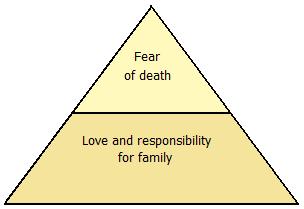
The fear of death can erode, however, and when it does, we have a safety net. Holocaust survivors, prisoners of war, and victims of torture have survived unspeakable suffering because of the love and responsibility they felt for their families.

Usually, we are kept alive by two layers of emotions: fear of
death and the love and responsibility we feel for our families

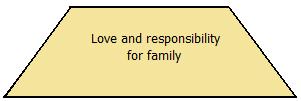
If we lose our fear of death, feelings of love and
responsibility keep us fighting for survival

When you have lived a full life and come toward the end of your years, the fear of death naturally erodes. Knowing that your loved ones can care for themselves gives you peace of mind, and you can allow yourself to relax your grip on life. When my grandfather was in his late eighties, he said, “I just want to go home.” We adored him and were very sad when he died at 89, but we knew it was what he wanted.

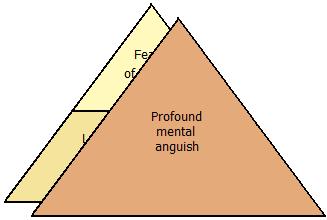
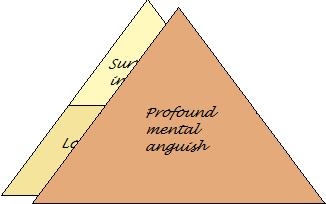
A well-lived life isn’t the only thing that causes people to relax their grip, however. Sometimes, depression and mental anguish become so great that they extinguish all emotions, including the fear of death and feelings of love and responsibility. This causes a total eclipse, which can lead people to put a permanent end to their own suffering.

Profound mental anguish can snuff out the feelings that usually keep us alive

A year ago day today, my friend Marc died of a total eclipse. I’ve thought a lot about how and why his safety net eroded. Obviously, Marc lost his fear of death. But what about the love and responsibility he felt for his wife and twin 11-year-old sons?

Clearly, all of Marc’s emotional systems failed. Marc thought he was ending his own suffering when he pulled the trigger. He didn’t realize that his suffering would increase exponentially as it passed to the wife, children, parents, siblings, friends, and colleagues who would, on some level, be grappling with his death for the rest of their lives.

I alternate between feelings of compassion and empathy (because of the despair that Marc died of) and anger (because of the pain that he forced the rest of us to live with). On some level, I guess I also feel a little envy. Marc’s pain is gone. Mine will remain for a long, long time.

—-

Marc Alan Olson

September 15, 1965~September 21, 2007

Born in Tacoma, Marc graduated from University of Puget Sound with a degree in Physics in 1987. While there, he and his dear friend, Scott Andrews founded Passages, the outdoor orientation program for freshmen. Marc also served on the UPS Board of Trustees. He worked as a software engineer at Microsoft since 1989. Marc lived his life to the fullest with energy and commitment, admired by all who knew him. He was a devoted and loving husband, father and friend who had many passions in life including learning, reading, cooking, flying, photography, hiking, boating, skiing and anything that immersed him in the great outdoors. With his wife and kids, Marc loved nothing more than hosting friends and family at their “little bit of paradise” on Stuart Island, enjoying fine food and wine, fellowship and spectacular sunsets. Marc will be remembered by his many friends for his brilliant mind, generous spirit and insatiable appetite for life. Marc is survived by his parents, Judy and Terry Olson, wife, Jean, twin sons, Alex and Jake, brother, Craig, sister, Marce and their families. A Memorial Service to celebrate Marc’s Life will be held on Thursday, Sept. 27th, 1:00 p.m. at University Presbyterian Church, 4540 15th Ave NE, Seattle. All are welcome. In lieu of flowers, remembrances may be made to a college fund that will be established for Alex and Jake.

How I lost my faith

When I was in the fourth grade, my sister, brother, and I responded to a hell-fire and brimstone altar call at the Bible Baptist Church in Rantoul, Illinois. My mother had been raised a Christian by devout Methodist parents, and her brother was a Methodist minister. But she also became “born again” and raised the bar. She got baptised in the church’s baptismal tank, which amounted to a declaration of war between her and my father. From then on, it was us against him.

Mom and Dad were now “unequally yoked,” and the pressure was on for him to see the light and accept Jesus as his Lord and Saviour. But Dad, who had been raised by an Army chaplain with a mean streak, would have none of it.

After Dad retired from the Air Force, we headed west, where he and Mom owned an unfinished house in Roy, Washington. There, we attended the Roy Missionary Church, where I eventually became a Sunday school teacher, youth group leader, and camp counselor.

It was while preparing one of my “sermons” for the youth group that I realized God was too small. I went out onto my grandfather’s land and prayed, “God, this is too easy. I could fit you into a shoebox and that can’t be right. Show me how big you are.”

At that time, I had my first serious boyfriend. His mother had died of cancer when his little sister was nine, and I had a special place in my heart for her. Jill was one of the brightest lights and most deeply spiritual people I’d ever met. She joined our youth group and caught the eye of Mike, who asked me to help him write poems with which to woo her. Soon, Mike and Jill fell in love.

I lived with my parents during my first two years of college and then packed my car and headed to Seattle Pacific University for the last two years. On my way out of town, I stopped by the cemetary where Jill’s mother was buried, knelt by her grave, and prayed, “God, I can’t take care of Jill anymore. Please take care of her for me.”

In the winter of my senior year at college, Mike and Jill were killed in a car accident. It took place right in front of Jill’s house and her father was the first one on the scene.

Jill’s father asked me to speak at the funeral, which I did. Seeing Jill’s broken body in a casket was difficult, but having both caskets in front of me while addressing the hundreds of people who attended the funeral was even harder. It was, without question, the most gut-wrenching thing I’ve ever done.

When Mike and Jill’s lives ended, my war with God began. I had asked–I had specifically asked–God to take care of Jill, and he killed her. If he didn’t outright kill her, then he failed to prevent her death, which was just as bad.

The prayer I’d said on my grandfather’s land had been answered–this God certainly didn’t fit in a shoebox. I felt completely betrayed and wanted nothing to do with him. My faith crumbled. The black-and-white world in which I had found comfort vanished. I was adrift on seas of gray under an angry sky and lost sight of everything that had once lent order to my universe.

Hopeless

Oddly, it never occurred to me not to believe in God–I guess I needed him to exist so I’d have someone to blame. I eventually rebuilt a spiritual world view that made sense to me, but it took almost 20 years to do it. It is nothing like my mother’s.

My mother believes that Mike and Jill, who had been together for a number of years, may have been finding it difficult to keep from getting physical with each other. She believes that God “took” them before they managed to fornicate. “You mean death is better than premarital sex?” I asked her. “Yes,” she said, nodding sadly.

* The illustration, by Kris Wiltse, is from the “Hopeless” card, which is part of the Mixed Emotions card deck.