Can a recession teach us anything about happiness?

Like many of us, I’ve been affected by the economy. Sometimes, when projecting my life out into the future, I have become deer-in-the-headlights scared, which has caused me to turn to the past and berate myself for choices that got me to where I am. No matter which direction I turned—forward or back—I felt awful. Eventually, I realized that I felt most comfortable in the present moment.

I realized that I would create the very future that I feared if I didn’t bring my thoughts home to the present. I also realized that no amount of second guessing could change the past, and pulled those thoughts into the present as well. (This is not something that stays done, by the way. It takes constant vigilance.)

For some reason, I believed that the circumstances I found myself in amounted to failure, and I feared that others would judge me as harshly as I judged myself. They didn’t. In fact, I received the most love and support from the people I least expected to receive it from.

Letting go of the past and the future and feeling the support of loved ones enabled me to relax into the moment and discover that I have absolutely everything I need—right now.

I achieved a somewhat fragile sense of inner peace when I heard a recorded interview with Marci Shimoff, author of Happy for No Reason, and checked her book out of the library. Since then, I’ve learned more about the field of Positive Psychology, and have a queue of books to read, including two by Positive Psychology founder Martin Seligman (Authentic Happiness and Learned Optimism) and one by scholar Sonja Lyubomirsky, who wrote The How of Happiness: A New Approach to Getting the Life You Want.

In the Upanishads, it says, “Happiness for any reason is just another form of misery.” The idea that I could be happy for no reason was a new one for me.

Like most of us, I thought my circumstances determined my happiness. We think we’ll be happy when we get a better job, find our soul mate, earn a certain amount of money, acquire a desired object, lose weight, achieve better health, and so on. But when we realize those goals, we often find that they don’t make us happy after all–or do for only a while. So we set our sights on a new goal, get back on the hamster wheel, and try again. It’s a game that can’t be won.

Not so with happiness that we find within. Because unconditional happiness isn’t linked to what we have, what we do, or who we’re with, we can never lose it. The spiritual masters we revere most achieved this state. They had nothing in the way of possessions, yet radiated a sense of unshakable peace and happiness that draws us to them.

For years, I’ve claimed the saying, “My greatest gift to others is my own happiness.” I even had it printed on my checks. But I never really got it until the recession forced me to realize that happiness doesn’t come from anything outside me. It comes from within and to achieve it, that’s where my focus needs to be.

“Happiness is the meaning and the purpose of life,
the whole aim and end of human existence.” Aristotle

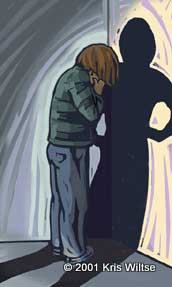
The illustration, by Kris Wiltse, is from the “Happy” card, which is part of the Mixed Emotions card deck.

A major spiritual shift

I was speaking, in passing, with a friend, when someone who overheard our conversation stopped, waited for it to end, and then mentioned something she’d just learned about that might help me. Challenging to pronounce, and even more difficult to spell, I had trouble finding more information about it on the Internet, but ultimately succeeded. It’s called ho’oponopono, and as you may guess from its spelling, is Hawaiian in origin.

What is it? It is an ancient practice of reconciliation and forgiveness. “Ho’oponopono” basically means to set things right. It entails taking 100 percent responsibility for everything that enters your awareness, because there is no “out there.” Everything you perceive is interpreted within the confines of your physical body, where all kinds of filters and influences come into play—especially in the form of memories.

We are all One, and in ho’oponopono, we take responsibility for the situations in which we find ourselves, whether we “caused” them or not. Long before I knew about ho’oponopono, I forced myself to go to the Dachau concentration camp in Germany. I did not play a role in the Holocaust. I was not responsible for it. But I knew that if humans could do that to each other, somewhere deep inside me, I must hold the potential to do it too. I had to face and confront that.

If I had known ho’oponopono then, my experience would have been different. Ho’oponopono is a simple four-step process that entails taking responsibility, apologizing, and asking for forgiveness. In Dachau, I might have said something like this:

  1. I am sorry for the suffering that people experienced here. I am sorry for the unspeakable cruelty that prisoners endured. But I am also sorry that Nazi soldiers were ordered to be cruel by their superiors.
  2. Please forgive me for the potential that lies within me to be so judgmental of and so cruel to my fellow human beings.
  3. Thank you for this opportunity to make amends.
  4. I love you.

This process is called “cleaning.”

Ho’oponopono in everyday life

Yesterday, a friend told me about a situation that has been incredibly challenging, in a twisted, convoluted, messed up sort of way. It was her experience, but once she told me about it, it became part of my experience, and something I needed to clean. You clean everything that comes into your experience that does not feel right or harmonious—which means you could be cleaning continuously. And when you are not cleaning, you can cut to the last step and say, “I love you” to things you’ve been taking for granted. Today, for example, I loved the trees in their autumn splendor and the road that brought me home.

Another example of using ho’oponopono is food, which I’ve thought a lot about. Are certain kinds of foods bad for us in and of themselves, or are they bad for us because we think they’re bad? A friend recently told the story of her Grandpa Norm, who had his own stick of butter at mealtimes (everyone else at the table had to share a second stick). He put butter on everything—including donuts—and lived to the age of 92. Clearly, grandpa was saying “I love you” to his butter. He welcomed it into his body and his body received it in harmony.

Although I’m committed to eating in a healthy way, I hate thinking of supermarkets or restaurants as mine fields, where danger lurks in the artificial sweeteners, trans fats, and genetically modified organisms that are hiding everywhere. So today, I tried ho’oponopono on the can of non-organic soup I had for lunch. I said, “I am sorry for the way I have judged you. Please forgive me for thinking that any part of you might be bad for my health. Thank you for nourishing me. I love you.” This will be our new way of saying grace.

The advantages of ho’oponopono

For me, the advantages of ho’oponopono are:

  1. It prevents me from judging. When I take responsibility for the circumstances I’m in, say I’m sorry, ask for forgiveness, and express gratitude and love, it becomes impossible to judge.
  2. It makes me feel peaceful.
  3. It makes me feel empowered, because acknowledging the role I play in everything means I can’t possibly be a victim.
  4. It addresses issues I’ve had with the law of attraction for a long time. The law of attraction is about intention (tell the Universe exactly what you want and you will get it). Ho’oponopono is about inspiration (clean up your mess and clear the way, so you can receive inspiration from the Divine). The law of attraction entails constant effort via affirmations, visioning, scripting, etc. Ho’oponopono entails clearing the channels between ourselves and the Divine, so we can receive (and act on) its inspiration and guidance. And that feels right to me.

I’ve fallen, and it takes a village to get me up

While Adrian and I were at an orchard party yesterday, I missed a step and took a header onto concrete. I lay there taking inventory, trying to figure out what body part hurt worst, and people rushed to my aid. I sat up and determined that my right foot had suffered the worst damage. A reflexologist immediately grabbed my ears and applied pressure in spots that help with pain. An emergency physician checked out my ankle, assured me that it wasn’t broken, and prevented a trip to the hospital. The host of the party brought an ace bandage and the physician’s wife, an emergency nurse, wrapped my foot in it. A neighbor brought arnica ointment and tablets, and I’m not exactly sure where the ibuprofen and a Ziploc bag full of ice came from. People helped me walk to a lawn-type recliner that they had placed in the sun for me (I was in shock and shaking), and they made me elevate my ankle and put ice on it.

As I lay on the recliner, I thought about the fact that we were completely out of hay, our goats had nothing to eat, and that I would be unable to go to the feed store after the party to get a couple bales of hay as I had planned. When I mentioned this, a woman I’d never met said that she needed to get a couple bales of hay for her goats, too, and offered to pick some up for me and bring them to our house. (Even here on rural Whidbey Island, it’s rare to be at a party with someone who also has goats, much less someone who has also run out of hay and was also headed to the feed store to get exactly the same thing you were planning to get after the party.)

My fall could’ve been an accident, carelessness, or dumb luck, but if this experience had a message in it, I wanted to hear it. I had literally missed a step. Might that be a metaphor for missing a step in real life? Had I overlooked something? Or maybe I just need to slow down.

Today, I thought of the friends, acquaintances, and strangers who had cared for me and how completely and instantaneously supported I felt. Tears came to my eyes, and I realized that that was the message: shit will happen, but you will get through it with the help of your community.

My foot hurts, but I can walk, and I have learned that I don’t always have to walk alone.

The psychic therapist

I once had a therapist who earned her living as a psychic before she switched careers and became a counselor. Her psychic skills were kind of handy when my ex-husband and I were going through marriage counseling, because identifying and articulating emotions was a real struggle for him. She could just “reach” in, dig around, and “pull out” some emotions for his consideration. When she narrowed down his options that way, he was able to identify how he felt.

Despite our efforts, my ex and I decided to end our marriage. Several years later, I was in a relationship with another man and went back to the same therapist. She insisted that he and I would end up together. But as time went on, it became clear that he was not right for me. Although I shared events, insights, and emotions that led me to believe that we were not meant for each other, she continued to insist that we were. So, I redoubled my efforts and kept trying.

In the end, my emotions and her psychic perspective on things were at such odds that I broke up with the guy and fired her. It taught me an important lesson. As tempting as it is, I don’t look outside myself for guidance anymore. That means no psychics, horoscopes, or other means of predicting the future. But it also means that I now heed my own inner guidance above that of experts, gurus, teachers, clergy, parents, and friends.

This is not always easy, and is something that I have to recommit myself to repeatedly–especially as I bump around in the dark trying to find my way. It is much easier to trust the sometimes loud and insistent guidance of others than it is to listen for that still, small voice inside myself. But I believe it’s what’s right for me. Fact is, I believe it’s right for us all.

Snakes, rocks, and hard places

When I look back on my life, I have often known when it was time to move on because I felt squeezed out of a particular situation. This is how I imagine a snake feels when it needs to shed. I imagine things start feeling constrictive, uncomfortable, irritating, and itchy. At that point, a snake will actually seek out a rock or a hard place and brush its body against it to tear its skin. Then it’ll work at the tear until it’s big enough, find something to catch the skin on, and wriggle out shiny and new.

Snakes shed so they can grow, and because they grow throughout their lives, they shed their skin until they die. I think we shed so that we can grow, too. Today, I realized that I have felt the constriction, discomfort, irritation, and itchiness of a situation that no longer fits. It is time to move on–to wriggle out of this situation so I can emerge into a new one.

If snakes were to look in mirrors (and I’m sure fashionable snakes do), they would see in their reflection everything they will eventually shed. What they shed is their outward appearance, their physical identity, the way they and others recognize themselves in the world. When I have faced sheddings in the past, I have found it impossible to imagine who I’d be without my old skin. Who would I be if I left corporate life to become a parent? Who would I be if I got divorced and raised my son on my own? Yet the skin no longer fit, and I knew it had to come off.

For me, the worst part of shedding is the sense of spiritual disconnection I feel. Before a snake sheds, it is virtually blind for a period of time, because the skin over its eyes becomes cloudy. This I understand, because I have felt blind in terms of my source of inner guidance lately.

A situation that was known and comfortable has become constrictive and irritating. I feel blind to my inner guidance, and am instinctively seeking out rocks and hard places that will help me tear open an escape hatch in this old skin. Seems like a bad thing, but is it? I feel confusion, grief, and a sense of loss around losing something that was known and comfortable. And this spot between the rock and the hard place is painful. But who am I becoming? Freed of my old skin, what possibilities and adventures await me?

How I lost my faith

When I was in the fourth grade, my sister, brother, and I responded to a hell-fire and brimstone altar call at the Bible Baptist Church in Rantoul, Illinois. My mother had been raised a Christian by devout Methodist parents, and her brother was a Methodist minister. But she also became “born again” and raised the bar. She got baptised in the church’s baptismal tank, which amounted to a declaration of war between her and my father. From then on, it was us against him.

Mom and Dad were now “unequally yoked,” and the pressure was on for him to see the light and accept Jesus as his Lord and Saviour. But Dad, who had been raised by an Army chaplain with a mean streak, would have none of it.

After Dad retired from the Air Force, we headed west, where he and Mom owned an unfinished house in Roy, Washington. There, we attended the Roy Missionary Church, where I eventually became a Sunday school teacher, youth group leader, and camp counselor.

It was while preparing one of my “sermons” for the youth group that I realized God was too small. I went out onto my grandfather’s land and prayed, “God, this is too easy. I could fit you into a shoebox and that can’t be right. Show me how big you are.”

At that time, I had my first serious boyfriend. His mother had died of cancer when his little sister was nine, and I had a special place in my heart for her. Jill was one of the brightest lights and most deeply spiritual people I’d ever met. She joined our youth group and caught the eye of Mike, who asked me to help him write poems with which to woo her. Soon, Mike and Jill fell in love.

I lived with my parents during my first two years of college and then packed my car and headed to Seattle Pacific University for the last two years. On my way out of town, I stopped by the cemetary where Jill’s mother was buried, knelt by her grave, and prayed, “God, I can’t take care of Jill anymore. Please take care of her for me.”

In the winter of my senior year at college, Mike and Jill were killed in a car accident. It took place right in front of Jill’s house and her father was the first one on the scene.

Jill’s father asked me to speak at the funeral, which I did. Seeing Jill’s broken body in a casket was difficult, but having both caskets in front of me while addressing the hundreds of people who attended the funeral was even harder. It was, without question, the most gut-wrenching thing I’ve ever done.

When Mike and Jill’s lives ended, my war with God began. I had asked–I had specifically asked–God to take care of Jill, and he killed her. If he didn’t outright kill her, then he failed to prevent her death, which was just as bad.

The prayer I’d said on my grandfather’s land had been answered–this God certainly didn’t fit in a shoebox. I felt completely betrayed and wanted nothing to do with him. My faith crumbled. The black-and-white world in which I had found comfort vanished. I was adrift on seas of gray under an angry sky and lost sight of everything that had once lent order to my universe.

Hopeless

Oddly, it never occurred to me not to believe in God–I guess I needed him to exist so I’d have someone to blame. I eventually rebuilt a spiritual world view that made sense to me, but it took almost 20 years to do it. It is nothing like my mother’s.

My mother believes that Mike and Jill, who had been together for a number of years, may have been finding it difficult to keep from getting physical with each other. She believes that God “took” them before they managed to fornicate. “You mean death is better than premarital sex?” I asked her. “Yes,” she said, nodding sadly.

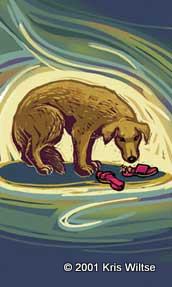
* The illustration, by Kris Wiltse, is from the “Hopeless” card, which is part of the Mixed Emotions card deck.

Why I trust my heart

My friend Marc committed suicide last September, leaving behind twin 11-year-old sons. I hated him for that, and yet felt compassion for the anquish that led him to end his own life. As I sat there at his memorial service, looking at the backs of his sons’ heads, I thought, how do you explain this to children?

I rememberd a seminar that I attended some time ago. One of the participants told the speaker that she was afraid that her mother, who suffered from depression, would commit suicide. The speaker said, “Every death is suicide.”

I’ve been thinking about that statement ever since. What the speaker meant was that we all have far more control over the circumstances of our lives and deaths than we realize. Of course, that presupposes several things–namely that:

  • Our souls/spirits are eternal
  • We have a “higher self” (Creator, Source, God, Guardian angel, Guide–what you call it doesn’t matter)
  • We came into this world with an agenda
  • We are have the power to be, do, or have whatever we want

UnsureEven though these things are all part of my belief system, the “every death is suicide” statement came as a surprise to me. I’ve lost quite a few people that I cared about. Too many of them were young and three died at their own hands. If all their deaths were “suicides” it means that none of their deaths were accidental, tragic, or premature. None of them were victims, because the way they died was part of the agenda they set before they were born.

I have found comfort in that.

The story I’m writing for Marc’s sons illustrates what I have come to believe–namely that emotions are the way we receive guidance from our higher selves. The way it works is extremely simple: When we feel good, we’re on the right track and when we don’t feel good we’re not. That is why I trust my heart. And that is why I call emotions the GPS for life’s journey.

The illustration, by Kris Wiltse, is from the “Unsure” card, which is part of the Mixed Emotions card deck.

The road not taken

Two roads diverged in a wood, and I–
I took the one less traveled by,
And that has made all the difference.

From “The Road Not Taken” by Robert Frost

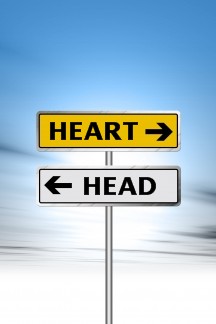
So often, when we come to a fork in the road, our hearts want to take us in one direction, and our heads want to take us in another. It’s been at least a decade since I last allowed my head to rule my heart. That lesson was so profoundly expensive, that I’ve followed my heart pretty faithfully ever since.

Head vs. Heart sign

Now that I’ve gotten to that place–which feels incredibly right to me–it makes me sad to witness heart vs. head battles in which someone’s head wins. Our heart’s desire is simple: all it wants is happiness. To see someone reason him- or herself out of happiness seems utterly contradictory to me.

In my own life, I’ve watched it happen with two men that I loved. When we were together, their hearts–childlike and innocent–simply said, “I love you. I respect and admRoad sign with Head and Heart pointing in the same directionire you. You bring out the best in me, and I like who I am when we’re together.” But when we were apart, their minds processed logistics, statistics, circumstances, and situations–calculating geographical distances, drive times, livelihoods, pensions, and parenting.

Their heart vs. mind battles were epic, and all I could do was hope that they would ultimately choose the road that led to me. But in the end, they did not.

Does following my heart mean that my head isn’t involved in my life’s journey? No, not at all. Following my heart simply means that I trust it to point me in the direction of happiness. Then my head figures out how to get from here to there.

If I put both my heart and mind into something, does it guarantee success? No. But I don’t ask as many “What
if . . .?” questions, or struggle with as many “If only . . .” regrets. When I put both my heart and mind into something, I know I’ve given it my all, and if an endeavor fails, it’s easier to chalk it up to experience and move on.

(I miss you, Chris.)

My mother was in the Hitler Youth

By the time my mother turned 10 in 1939, it was compulsory for all German girls between the ages of 10 and 18 to join the female branch of the Hitler Youth, which was called the League of German Girls (Bund Deutscher Mädel). Mom came from a Christian family that was convinced Adolf Hitler was the Antichrist, but no one could opt out of the Hitler Youth. The mission of the Hitler Youth was to prepare boys, such as my uncle, to serve in the military. The mission of the League of German Girls was to prepare girls to be better wives, mothers, and homemakers.

When the Nazis ran out of able-bodied soldiers, they started drafting older men, including my grandfather, who wound up in the navy. They also began drafting boys, and when mom’s brother saw the writing on the wall, he voluntarily joined the mountain infantry (Gebirgsjäger). In spite of that, he got drafted into the SS.

My grandmother went from one office in Ludwigsburg to another with the same message, “Walter can’t be drafted into the SS–he already joined the mountain infantry.” Finally somebody heard her and set things straight. Neither my grandfather (Opa) nor my uncle (Onkel Walter) saw much action during the war. Opa was a cook in the Navy and there wasn’t that much going on in the mountains where Onkel Walter was.

I have a copy of the official family tree that proves that my maternal grandmother’s family is of Aryan descent. I also have a silver coin with a swastika on it and a gold button from my grandfather’s Navy uniform. Why do I save that stuff? Because I believe, to the very marrow of my bones, that George Santayana was right when he said “Those who cannot remember the past are condemned to repeat it.”

My unpleasant memorabelia forces me to remember–as did a visit with my friend Marcos to Dachau. My aunt Elfriede couldn’t understand why we wanted to go to Dachau–couldn’t we just forget about the past? For me the answer to that question is “Absolutely not.”

My life is enriched by Jewish and gay friends, as well as a niece with Down Syndrome. My son’s paternal grandmother comes from a family that is mainly Jahova’s Witness. Chances are good that none of them would have survived the Holocaust.

“It’s different today,” I’m tempted to say. “We know better. There’s no way we would ever let that happen again.” Right. Tell that to people in Rwanda and Darfur.

Not only is it possible to repeat the past, the potential for it is within me, genetically speaking. I’m more than half German, and the blood that is coursing through my veins is no different than that of the soldiers who gave and carried out orders to exterminate people because they’re different.

Eleven million Jews, Slavs, Roma, ethnic Poles, Soviet POWs, the disabled and mentally ill, gay men, freemasons, Jehova’s Witnesses, and political activists were killed during WWII. It’s hard to imagine how many people that is. It’s more than the entire population of metropolitan Chicago. It’s more than 190 Yankee stadiums* full of people. It means killing more than 30,000 people a day for an entire year.

As much as I want to deny it, somewhere deep within me must lie the potential for killing another human being because he or she is different. Not because of my German heritage, but because I am human.

I carry within me a deep sense of responsibility for what happened during WWII. Not because I was there. Not because I participated in it. But because I believe that the seeds of prejudice, hatred, and judgment lie within us all and, given the right conditions, could sprout and take root.

Do I dwell on the past? No. But every once in a while an opportunity comes along to accept or judge. That’s when I remember the past, and recommit myself not to repeat it.

Regretful Ashamed

Grief Guilty

Kris Wiltse’s illustrations for the Regretful, Ashamed, Grief, and Guilty cards from the Mixed Emotions card deck.

* Yes, I know the plural of stadium is stadia. But who says that?

Building from the heart (II)

I am sometimes baffled by the desires that consume me. Goats for one. Building a house on my own for another. But the truth is, I can’t imagine who I’d be if I hadn’t built our house. I had to make thousands of decisions in the process, and with each one, I discovered who I am.

The question “How do I want to feel in this space?” informed every choice I made. Most of all, I wanted to feel comfortable, and for that, I needed my surroundings to be imperfect. The cedar shingles on the outside of the house are varied in width and staggered, not lined up like little soldiers. The walls inside are earth plaster. Trim, shelves, floors, mantles, and window sills are quirky and full of knot holes because they’re made of lumber that came from our own trees. The tiles in the bathroom look hand cut and don’t line up perfectly. The floor downstairs is stained concrete.

Everywhere I look, I see beautiful imperfections, and in surroundings like that, I feel free to be who I am–an imperfect human being.

In our house, I wanted to feel happiness, comfort, safety, love, fulfillment, hope, creativity, pride, peace, gratitude, and inspiration. Once I knew that, it wasn’t too hard to create spaces that evoked those feelings in me.

There’s a little saying I live by that goes something like this:

The greatest gift I can give to others is my own happiness.

I stayed true to my own happiness as I created our house, and in the process, created a space in which others are happy, too. Everyone who visits feels at home.