Why I trust my heart

My friend Marc committed suicide last September, leaving behind twin 11-year-old sons. I hated him for that, and yet felt compassion for the anquish that led him to end his own life. As I sat there at his memorial service, looking at the backs of his sons’ heads, I thought, how do you explain this to children?

I rememberd a seminar that I attended some time ago. One of the participants told the speaker that she was afraid that her mother, who suffered from depression, would commit suicide. The speaker said, “Every death is suicide.”

I’ve been thinking about that statement ever since. What the speaker meant was that we all have far more control over the circumstances of our lives and deaths than we realize. Of course, that presupposes several things–namely that:

  • Our souls/spirits are eternal
  • We have a “higher self” (Creator, Source, God, Guardian angel, Guide–what you call it doesn’t matter)
  • We came into this world with an agenda
  • We are have the power to be, do, or have whatever we want

UnsureEven though these things are all part of my belief system, the “every death is suicide” statement came as a surprise to me. I’ve lost quite a few people that I cared about. Too many of them were young and three died at their own hands. If all their deaths were “suicides” it means that none of their deaths were accidental, tragic, or premature. None of them were victims, because the way they died was part of the agenda they set before they were born.

I have found comfort in that.

The story I’m writing for Marc’s sons illustrates what I have come to believe–namely that emotions are the way we receive guidance from our higher selves. The way it works is extremely simple: When we feel good, we’re on the right track and when we don’t feel good we’re not. That is why I trust my heart. And that is why I call emotions the GPS for life’s journey.

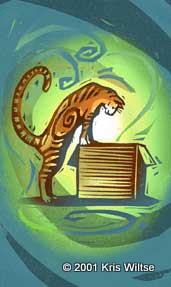
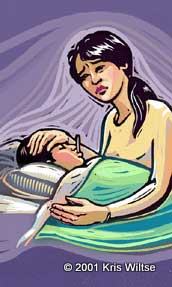
The illustration, by Kris Wiltse, is from the “Unsure” card, which is part of the Mixed Emotions card deck.

The road not taken

Two roads diverged in a wood, and I–
I took the one less traveled by,
And that has made all the difference.

From “The Road Not Taken” by Robert Frost

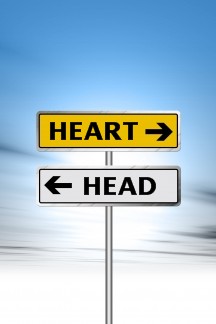
So often, when we come to a fork in the road, our hearts want to take us in one direction, and our heads want to take us in another. It’s been at least a decade since I last allowed my head to rule my heart. That lesson was so profoundly expensive, that I’ve followed my heart pretty faithfully ever since.

Head vs. Heart sign

Now that I’ve gotten to that place–which feels incredibly right to me–it makes me sad to witness heart vs. head battles in which someone’s head wins. Our heart’s desire is simple: all it wants is happiness. To see someone reason him- or herself out of happiness seems utterly contradictory to me.

In my own life, I’ve watched it happen with two men that I loved. When we were together, their hearts–childlike and innocent–simply said, “I love you. I respect and admRoad sign with Head and Heart pointing in the same directionire you. You bring out the best in me, and I like who I am when we’re together.” But when we were apart, their minds processed logistics, statistics, circumstances, and situations–calculating geographical distances, drive times, livelihoods, pensions, and parenting.

Their heart vs. mind battles were epic, and all I could do was hope that they would ultimately choose the road that led to me. But in the end, they did not.

Does following my heart mean that my head isn’t involved in my life’s journey? No, not at all. Following my heart simply means that I trust it to point me in the direction of happiness. Then my head figures out how to get from here to there.

If I put both my heart and mind into something, does it guarantee success? No. But I don’t ask as many “What
if . . .?” questions, or struggle with as many “If only . . .” regrets. When I put both my heart and mind into something, I know I’ve given it my all, and if an endeavor fails, it’s easier to chalk it up to experience and move on.

(I miss you, Chris.)

Happiness: not for the faint of heart

There is no happiness fairy. There is no guru, motivational speaker, author, mentor, lover, or clergyperson who can make us happy–though we often wish there was.

Happiness is a decision we make, a risk we take, and if we are happy, it is because we dare to be.

ConfidentI am happy because I discovered that English made my heart sing, and I majored in it in spite of the fact that it provided me with no guaranteed livelihood.

I am happy because I paid off my student loans and cashed in my 401k to finance a year in Europe.

I am happy because I stepped out of the center of my own universe to make room for a child.

I am happy because I weathered the storm of ugliness that is divorce, and gave the sun a chance to come out again.

I am happy because I left the security of a nine-to-five job to start several businesses based on my passions.

I am happy because my son and I left everything we knew behind in Seattle to move to an island that felt like home from the moment we set foot on it.

I am happy because I built my dream house when I wanted to–even though I was a single parent at the time.

I am happy because I have a little farm.

When my courage wanes, I put on a bracelet that says, “Leap and the net will appear.” Happiness, I have discovered, is not for the faint of heart. I am only truly happy when I have the courage to be.

The illustration, by Kris Wiltse, is from the “Confident” card, which is part of the Mixed Emotions card deck.

Bedtime questions from a 9-year-old

Tonight at bedtime, my son Adrian asked, “How big do you think God’s turds are?”

“What kind of question is that?” I asked. “You know God is spirit.”

“Yeah but if he were real, how big do you think they’d be?”

What do you say? “As big as a school bus, now go to sleep.”

Comforted

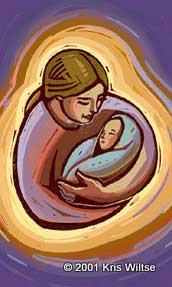
Kris Wiltse’s illustration for “Comforted” from the Mixed Emotions card deck.

I lost my heart to Jack–and found my soul

I got to spend some time with my “other man” yesterday–my friend’s 15-month-old son, Jack. I met within an hour or two after he was born and have felt connected to him ever since–connected enough to want to be at Children’s Hospital in Seattle when he had surgery for sagittal synostosis at five months of age.

Yesterday, Jack and I visited the goats and chickens and watched his elder brother play with my son, but we really hit our stride when we went inside, sat on the couch and started looking at board books. Then we moved to the dining room table, where he sat on my lap for a long time, eating cereal out of a bag. There is nothing quite like the feeling of a relaxed and contented toddler on your lap.

The Jack-is-my-guru moment came later, when I kissed him on the cheek. He leaned toward me and presented his face again, so I kissed it. Again, and I kissed it, and again, and again. It moves me when children do that–they are so confident in their lovability that they fully expect to be adored.

At 15 months old, Jack is of no “use” whatsoever. He cannot “earn” someone’s love by behaving well, doing his chores, or getting good grades. Jack just is and that is enough. He knows that is enough.

Jack
Jack

I don’t know how old I was when I concluded that being was no longer enough to warrant my mother’s love. At a very young age, I began doing things that I hoped would make me lovable–specifically the things that made her happy. Right or wrong, the math in my young brain went something like this:

mom + happy = Petra is loved
mom – happy = Petra is unloved

My life depended on my mother’s love, so I read every facial expression, anticipated her needs, and met them–often before she asked. I resolved to become whoever she would love–and lost myself entirely in the process. I would not begin to reclaim myself until I was 28 years old, and at 47, I’m still working at it.

I am trying to remember what I hope Jack will never forget: that being who I am is all it takes to be worthy of love.

Who I am is enough.

Loving (platonic)

Kris Wiltse’s illustrations for one of two “Loving” cards from the Mixed Emotions card deck.

Burn, baby, burn

I’ve felt suffocated lately by a snarl of negative feelings. As I sat in my meditation loft last night, with a candle burning before me, a little voice said, “Burn the Fear card.” (There was a deck of Mixed Emotions cards beside me.)

“I’m not going to burn the Fear card,” I thought. “It’ll ruin my whole deck.” But I could burn a copy! So I climbed down my loft ladder, made copies of the cards that described how I felt, cut them out and got a metal bowl. Back in the loft, I did EFTon my feelings of desperation, fear, and betrayal and then burned the corresponding “cards.” (I deliberately didn’t put a “Betrayed” card in the Mixed Emotions deck, so I made my own by writing the word on a slip of paper).

At this rate, it will take me many nights to burn through all my negative emotions. But you know what?

I already feel better.

Here are the feelings in my burn pile:

Afraid Desperate

Afraid and desparate

Depressed Overwhelmed

Depressed and overwhelmed

Disappointed Frustrated

Disappointed and frustrated

Discouraged Worried

Discouraged and worried
Vulnerable Panicky
Vulnerable and panicky

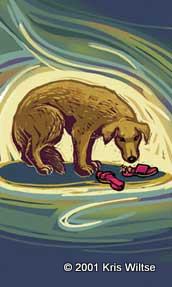
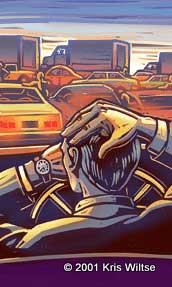
Illustrations are by Kris Wiltse from the Mixed Emotions card deck.
My mother was in the Hitler Youth

By the time my mother turned 10 in 1939, it was compulsory for all German girls between the ages of 10 and 18 to join the female branch of the Hitler Youth, which was called the League of German Girls (Bund Deutscher Mädel). Mom came from a Christian family that was convinced Adolf Hitler was the Antichrist, but no one could opt out of the Hitler Youth. The mission of the Hitler Youth was to prepare boys, such as my uncle, to serve in the military. The mission of the League of German Girls was to prepare girls to be better wives, mothers, and homemakers.

When the Nazis ran out of able-bodied soldiers, they started drafting older men, including my grandfather, who wound up in the navy. They also began drafting boys, and when mom’s brother saw the writing on the wall, he voluntarily joined the mountain infantry (Gebirgsjäger). In spite of that, he got drafted into the SS.

My grandmother went from one office in Ludwigsburg to another with the same message, “Walter can’t be drafted into the SS–he already joined the mountain infantry.” Finally somebody heard her and set things straight. Neither my grandfather (Opa) nor my uncle (Onkel Walter) saw much action during the war. Opa was a cook in the Navy and there wasn’t that much going on in the mountains where Onkel Walter was.

I have a copy of the official family tree that proves that my maternal grandmother’s family is of Aryan descent. I also have a silver coin with a swastika on it and a gold button from my grandfather’s Navy uniform. Why do I save that stuff? Because I believe, to the very marrow of my bones, that George Santayana was right when he said “Those who cannot remember the past are condemned to repeat it.”

My unpleasant memorabelia forces me to remember–as did a visit with my friend Marcos to Dachau. My aunt Elfriede couldn’t understand why we wanted to go to Dachau–couldn’t we just forget about the past? For me the answer to that question is “Absolutely not.”

My life is enriched by Jewish and gay friends, as well as a niece with Down Syndrome. My son’s paternal grandmother comes from a family that is mainly Jahova’s Witness. Chances are good that none of them would have survived the Holocaust.

“It’s different today,” I’m tempted to say. “We know better. There’s no way we would ever let that happen again.” Right. Tell that to people in Rwanda and Darfur.

Not only is it possible to repeat the past, the potential for it is within me, genetically speaking. I’m more than half German, and the blood that is coursing through my veins is no different than that of the soldiers who gave and carried out orders to exterminate people because they’re different.

Eleven million Jews, Slavs, Roma, ethnic Poles, Soviet POWs, the disabled and mentally ill, gay men, freemasons, Jehova’s Witnesses, and political activists were killed during WWII. It’s hard to imagine how many people that is. It’s more than the entire population of metropolitan Chicago. It’s more than 190 Yankee stadiums* full of people. It means killing more than 30,000 people a day for an entire year.

As much as I want to deny it, somewhere deep within me must lie the potential for killing another human being because he or she is different. Not because of my German heritage, but because I am human.

I carry within me a deep sense of responsibility for what happened during WWII. Not because I was there. Not because I participated in it. But because I believe that the seeds of prejudice, hatred, and judgment lie within us all and, given the right conditions, could sprout and take root.

Do I dwell on the past? No. But every once in a while an opportunity comes along to accept or judge. That’s when I remember the past, and recommit myself not to repeat it.

Regretful Ashamed

Grief Guilty

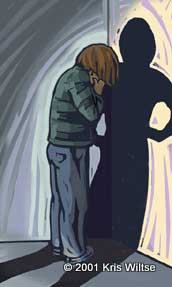
Kris Wiltse’s illustrations for the Regretful, Ashamed, Grief, and Guilty cards from the Mixed Emotions card deck.

* Yes, I know the plural of stadium is stadia. But who says that?

Building from the heart (II)

I am sometimes baffled by the desires that consume me. Goats for one. Building a house on my own for another. But the truth is, I can’t imagine who I’d be if I hadn’t built our house. I had to make thousands of decisions in the process, and with each one, I discovered who I am.

The question “How do I want to feel in this space?” informed every choice I made. Most of all, I wanted to feel comfortable, and for that, I needed my surroundings to be imperfect. The cedar shingles on the outside of the house are varied in width and staggered, not lined up like little soldiers. The walls inside are earth plaster. Trim, shelves, floors, mantles, and window sills are quirky and full of knot holes because they’re made of lumber that came from our own trees. The tiles in the bathroom look hand cut and don’t line up perfectly. The floor downstairs is stained concrete.

Everywhere I look, I see beautiful imperfections, and in surroundings like that, I feel free to be who I am–an imperfect human being.

In our house, I wanted to feel happiness, comfort, safety, love, fulfillment, hope, creativity, pride, peace, gratitude, and inspiration. Once I knew that, it wasn’t too hard to create spaces that evoked those feelings in me.

There’s a little saying I live by that goes something like this:

The greatest gift I can give to others is my own happiness.

I stayed true to my own happiness as I created our house, and in the process, created a space in which others are happy, too. Everyone who visits feels at home.

The heart-expansion project

You know that part in “How the Grinch Stole Christmas” where the Grinch’s heart, which is originally two sizes too small, grows three sizes, and everything changes? That happened to our hearts this weekend.

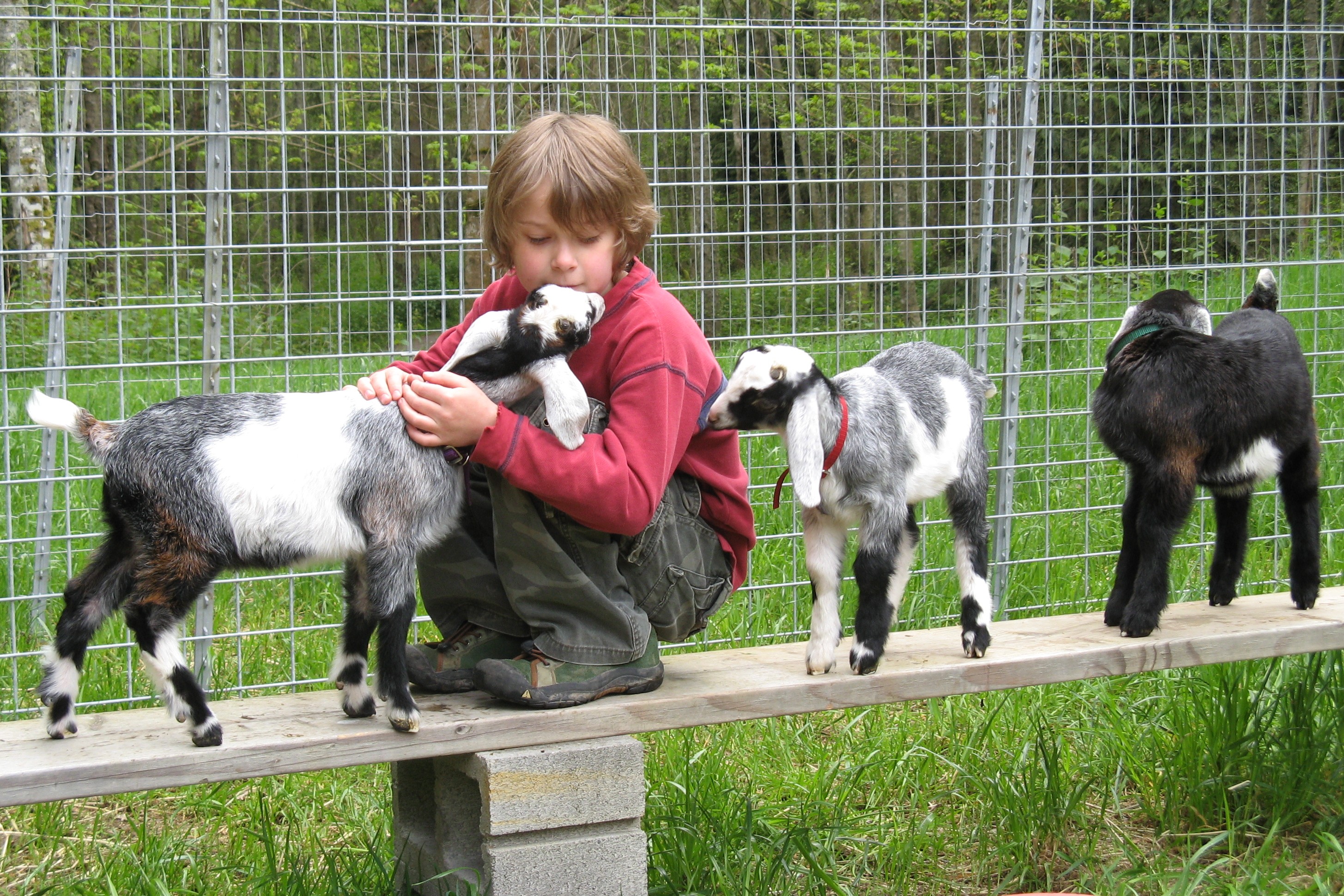
Our hearts didn’t seem small to us before–they were your normal, average-sized vessels. But now that we’ve brought home four baby goats, our hearts feel much bigger than they were and that has changed our lives. My son Adrian quickly decided that he didn’t want to go to school anymore, and although I find it challenging to write with a baby goat asleep on my lap, I’d rather type slowly and inefficiently than forgo the experience. We are virtually incapacitated by our love for these little animals.

Adrian with Pandora, Rhea, and Pan

That has me thinking. Isn’t it in everyone’s best interest to increase our capacity for love? Won’t the compassion my son gains from this experience enable him to engage more compassionately with all living things? Won’t his ability to intuit these babies’ unspoken needs make him more sensitive to the needs of others? Won’t his willingness to take responsibility for their physical well-being make him more willing to engage in the work that makes any relationship thrive?

My hunch is that the answer to all of these questions is, “Yes.” As Adrian’s mother and “childhood designer,” I sometimes imagine who I want Adrian to be when he grows up, and then reverse-engineer experiences that I think will lead to that result. Our little farm is one of those experiences.

Loving (platonic)

Kris Wiltse’s illustrations for the “Loving” card from the Mixed Emotions card deck.
House cats as role models

When our cats give me a sleepy-eyed squint as I pass them throughout the day, I think, “I want to be just like you.” They are so happy. So content. They have such utter faith that their needs will be met, and unlike dogs, they don’t seem to think they have to do anything to earn that.

Me? I’m a dog. A therapist once told me, “You seem to think you need to earn your keep in the universe.” She was right. I don’t know where it comes from. Want me to fetch the ball? OK. Want me to sit? I’m on it. Want me to roll over? Play dead? No problem. Just love me!

Our cats, on the other hand, fully expect us to please and love them. And the funny thing is, we do.

There is much about the religion that I was raised in that I no longer embrace, but the following quote, which is attributed to Jesus, still has me thinking:

“Therefore I tell you, do not worry about your life, what you will eat or drink; or about your body, what you will wear. Is not life more important than food, and the body more important than clothes? Look at the birds of the air; they do not sow or reap or store away in barns, and yet your heavenly Father feeds them. Are you not much more valuable than they? Who of you by worrying can add a single hour to his life?

“And why do you worry about clothes? See how the lilies of the field grow. They do not labor or spin. Yet I tell you that not even Solomon in all his splendor was dressed like one of these. If that is how God clothes the grass of the field, which is here today and tomorrow is thrown into the fire, will he not much more clothe you, O you of little faith? So do not worry, saying, ‘What shall we eat?’ or ‘What shall we drink?’ or ‘What shall we wear?’ For the pagans run after all these things, and your heavenly Father knows that you need them. But seek first his kingdom and his righteousness, and all these things will be given to you as well. Therefore do not worry about tomorrow, for tomorrow will worry about itself. Each day has enough trouble of its own.”

Matthew 6:25-34

This is apparently the creed that my cats live by. It works for them. Could it work for me?

Curious Trusting

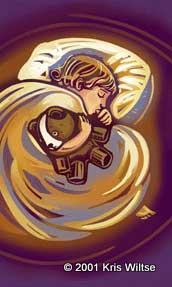
Kris Wiltse’s illustrations for the “Curious” and “Trusting” cards from the Mixed Emotions card deck.